
Dental Crowns in Birmingham, AL

Dental crowns are a dependable solution for restoring teeth that are damaged, weakened, or cosmetically compromised. At Daniel Dentistry, we use custom-crafted crowns to strengthen your natural tooth, protect it from further damage, and improve the overall appearance of your smile.
Crowns are often recommended when a tooth can no longer be restored with a traditional filling alone. By reinforcing the existing tooth structure, a crown helps preserve your natural tooth while restoring comfort, function, and confidence.

What Is a Dental Crown?

A dental crown is a restoration that fits securely over your existing tooth, covering it entirely above the gumline. It is designed to restore the tooth’s strength, shape, size, and appearance while protecting it from further deterioration.
Dental crowns are commonly used for teeth that are chipped, cracked, broken, worn down from grinding or acid erosion, heavily decayed, discolored, misshapen, or weakened by large fillings. Crowns are also placed on top of dental implants to replace missing teeth and restore normal biting and chewing function.
In addition to strengthening the tooth, a crown can significantly improve aesthetics by covering stains and discoloration and blending naturally with the surrounding teeth.

Benefits of Dental Crowns

Dental crowns provide both functional and cosmetic benefits, including:

Strengthening and protecting damaged or weakened teeth

Restoring normal biting and chewing ability

Preventing further decay or structural breakdown

Dental crowns provide both functional and cosmetic benefits, including:

Improving tooth shape, alignment, and appearance

Preserving the natural tooth and avoiding extraction

Providing a secure, long-lasting solution for tooth restoration
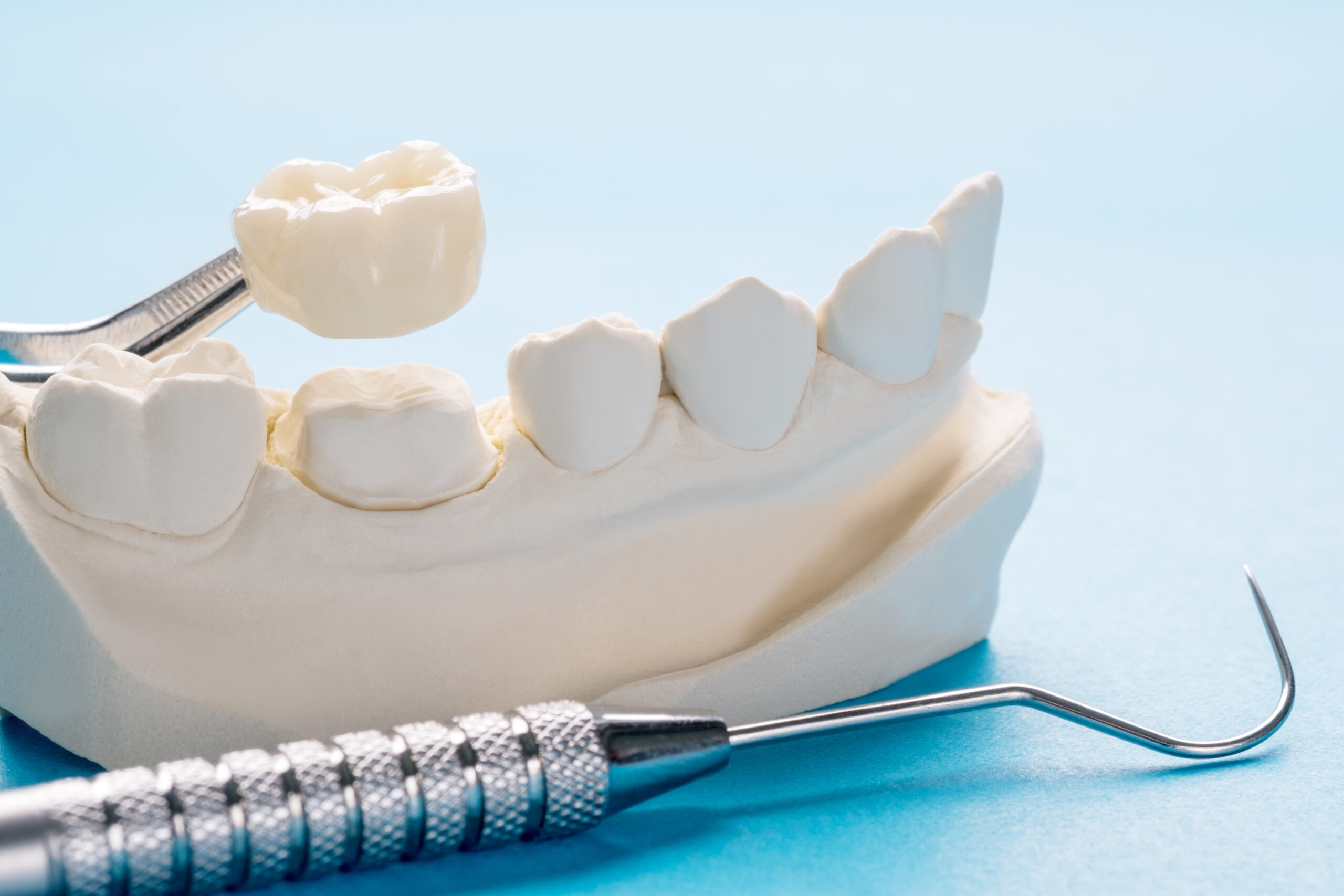
When used in combination with a dental implant, a crown serves as the visible replacement tooth, supported by a stable foundation within the jawbone. This allows patients to regain function and appearance without relying on removable options.

How It Works

The dental crown process is typically completed over two visits.
During the first appointment, the tooth is numbed to ensure comfort. Any decay or damaged material is removed, and the tooth is shaped to allow the crown to fit properly. An impression of the tooth and bite is taken, and a temporary crown is placed to protect the tooth while the permanent crown is being made.
At the second visit, the temporary crown is removed, and the permanent crown is carefully fitted, adjusted, and cemented into place. Once secured, the crown functions and feels like a natural tooth.

Signs or Symptoms You May Need a Dental Crown

You may benefit from a dental crown if you experience:

A cracked, chipped, or broken tooth

Pain or sensitivity when chewing

A tooth weakened by a large filling

Excessive wear from grinding or erosion

Severe discoloration or misshapen teeth

A tooth that has undergone root canal treatment

What to Expect After Treatment

After a dental crown is placed, most patients notice improved comfort, strength, and appearance. Mild sensitivity may occur initially and typically resolves within a short period. With good oral hygiene and routine dental visits, a crown can provide long-term durability and protection.
Your dentist will monitor the crown during regular checkups to ensure it continues to function properly.

Why Choose Our Office

At Daniel Dentistry, dental crowns are placed with precision, care, and attention to detail. Patients benefit from:

Our approach ensures that each crown supports both your oral health and the appearance of your smile.

Frequently Asked Questions

How long do dental crowns last?

With proper care, dental crowns commonly last 10 to 15 years or longer.

Are dental crowns painful?

The procedure is performed under local anesthesia, and most patients experience little to no discomfort.

What materials are dental crowns made from?

Crowns may be made from porcelain, ceramic, metal, porcelain fused to metal, resin composite, or gold. Porcelain is often chosen for its natural appearance.

Can a crown fall off?

Crowns are securely cemented, but they can loosen over time if the underlying tooth or cement is compromised. Regular dental visits help reduce this risk.

Scroll to Top